
Trigger Point Injections for Muscle Pain & Spasm
Targeted treatment for painful muscle knots that contribute to localized or referred pain.
What Are Trigger Point Injections?
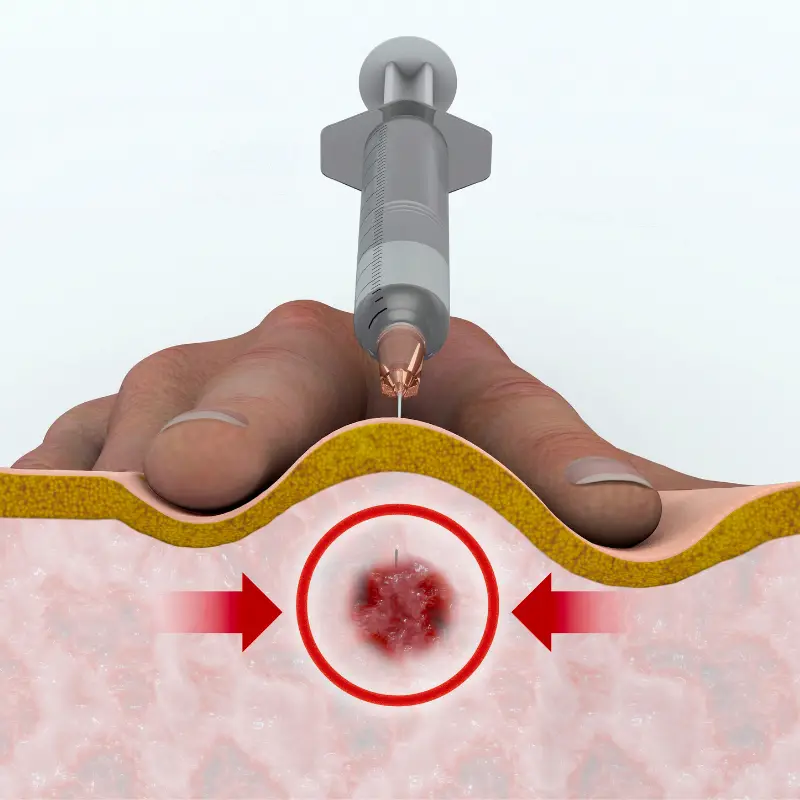
Trigger point injections are used to treat painful muscle knots that cause localized or referred pain

How Trigger Points Cause Pain
Trigger points are tight bands of muscle that restrict movement and irritate surrounding nerves, often contributing to chronic muscle pain.
Conditions Treated With Trigger Point Injections
These injections are commonly used for:
- Myofascial pain syndromes
- Neck, shoulder, and back muscle pain
- Tension-related muscle dysfunction
Trigger Point Injections vs ESWT
Trigger point injections target muscle knots directly, while ESWT addresses tendon and soft-tissue healing through acoustic energy.
Treatment Process & Relief Timeline
Relief may occur quickly, often within days. Injections are typically part of a broader care plan rather than a standalone solution.
Safety & Frequency
Trigger point injections are generally well tolerated and may be repeated as clinically appropriate.
Is This Treatment Right for You?

This treatment may be appropriate for muscle-driven pain rather than joint or tendon pathology.
Schedule an evaluation to determine whether trigger point injections are appropriate.
Trigger Point Injections - FAQs
Trigger Point Treatment Process
Injections are typically part of a broader care plan rather than a standalone solution.
What is the goal of trigger point injections?
The goal is to release painful muscle knots that restrict movement and contribute to localized or referred pain.
How quickly do trigger point injections work?
Many patients experience relief within days, though results vary depending on muscle involvement and contributing factors.
Are trigger point injections a long-term solution?
They are typically used as part of a broader care plan rather than a standalone long-term treatment.