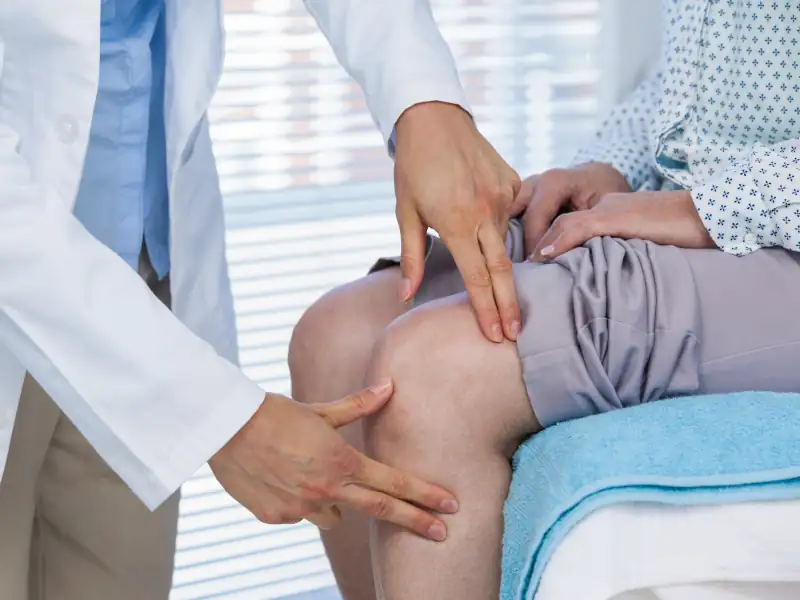
Prolotherapy for Joint & Ligament Pain
Injection-based care designed to strengthen weakened ligaments and tendons and improve joint stability over time.
What Is Prolotherapy?
Prolotherapy is an injection-based treatment designed to support the repair and strengthening of ligaments and tendons. It is commonly used when joint instability or connective tissue weakness contributes to chronic pain.
How Prolotherapy Strengthens Injured Tissue
Prolotherapy introduces a solution into targeted connective tissue to stimulate a localized healing response. This process may encourage tissue remodeling and improved structural support over time.
The focus is not on temporary pain relief, but on addressing underlying tissue integrity.
Conditions Treated With Prolotherapy

Prolotherapy vs PRP
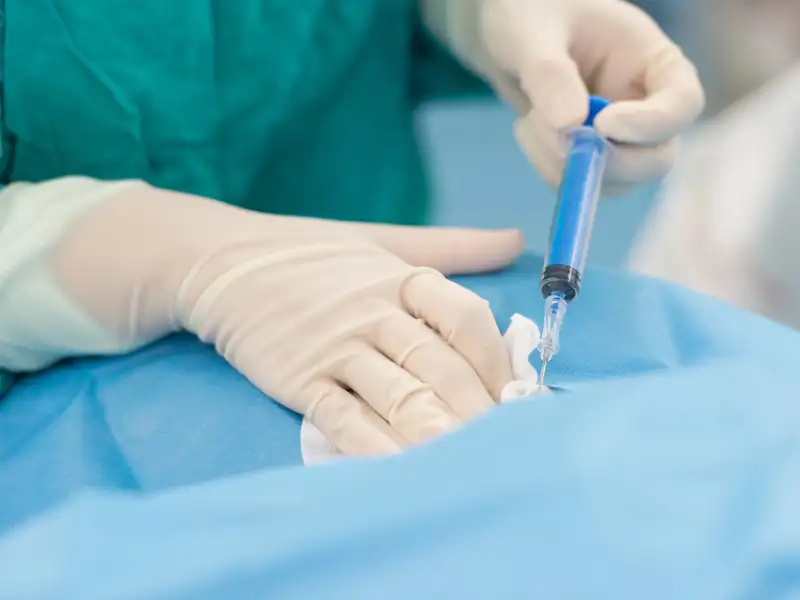
While both treatments support healing, prolotherapy focuses primarily on ligament and tendon stability, whereas PRP delivers concentrated growth factors from blood.
The choice between these options depends on tissue type, severity, and clinical findings.
Treatment Process & Frequency
Prolotherapy is typically administered as a series of injections spaced over time. The number of sessions varies based on the condition and response to treatment.
Recovery & Expected Outcomes
- Mild soreness or stiffness after treatment is common.
- Improvements often occur progressively as tissue strength develops.
Candidate Evaluation
Request an evaluation to determine whether prolotherapy is appropriate for your condition.
FAQs
Prolotherapy
It is commonly used when joint instability or connective tissue weakness contributes to chronic pain.
What types of pain respond best to prolotherapy?
Prolotherapy is most often used when pain is driven by ligament or tendon weakness rather than joint cartilage damage or active inflammation.
How many prolotherapy sessions are needed?
Treatment is typically delivered in a series, spaced over time. The number of sessions varies based on tissue response and clinical goals.
Can prolotherapy be combined with other treatments?
Yes. Prolotherapy is often part of a broader treatment plan that may include physical therapy or other regenerative options when appropriate.