
Focused Shockwave Therapy (ESWT) for Musculoskeletal Pain
A non-invasive treatment that uses acoustic energy to stimulate healing in chronic tendon and soft-tissue conditions.

What Is Focused Shockwave Therapy?
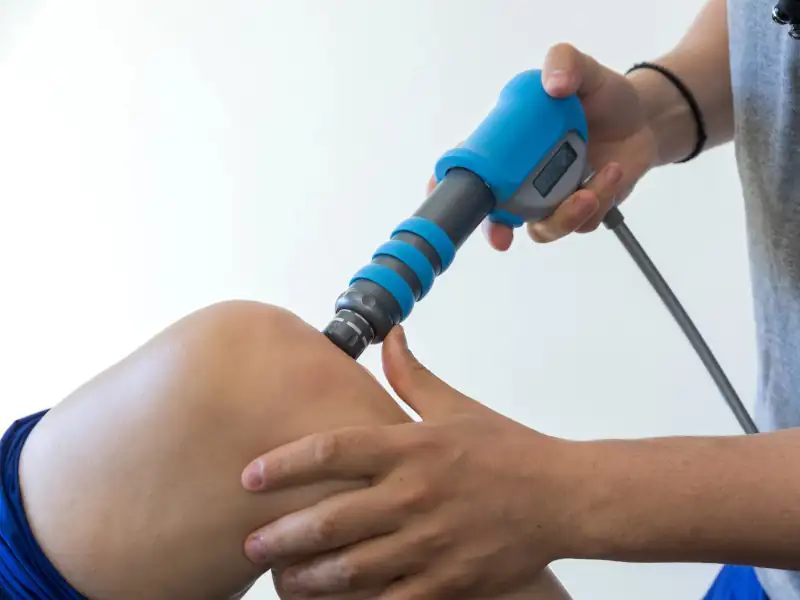
Focused Shockwave Therapy (ESWT) is a non-invasive treatment that uses acoustic energy to stimulate healing in chronic soft-tissue conditions.
No injections or incisions are involved.
How ESWT Stimulates Healing
Shockwaves promote increased blood flow and cellular signaling in targeted tissue, which may support healing and pain reduction over time.
ESWT vs Injection-Based Treatments
Unlike PRP or prolotherapy, ESWT does not involve needles or biologic injections. It is often considered when patients prefer a non-invasive option or as part of a broader treatment plan.
Conditions Treated With ESWT

ESWT vs Injection-Based Treatments
Unlike PRP or prolotherapy, ESWT does not involve needles or biologic injections. It is often considered when patients prefer a non-invasive option or as part of a broader treatment plan.
What a Shockwave Session Is Like
Sessions are performed in-office and typically last under 20 minutes. Most patients tolerate treatment well.
Treatment Schedule & Results
A series of sessions is often recommended. Improvements typically develop over several weeks.
Who Benefits Most From ESWT?
Patients with chronic tendon or soft-tissue pain who have not responded to rest or therapy may benefit most.
Schedule an evaluation to see if shockwave therapy is appropriate for your condition.

Focused Shockwave Therapy (ESWT) FAQs
ESWT Stimulates Healing Shockwaves
By promoting increased blood flow and cellular signaling in targeted tissue
Does shockwave therapy involve injections or medication?
No. ESWT is completely non-invasive and does not involve injections, needles, or biologic substances.
How many ESWT sessions are typically recommended?
Most treatment plans involve a short series of sessions. The exact number depends on the condition and response to therapy.
Is shockwave therapy painful?
Most patients tolerate treatment well. Sensation varies depending on the area treated and tissue sensitivity.